
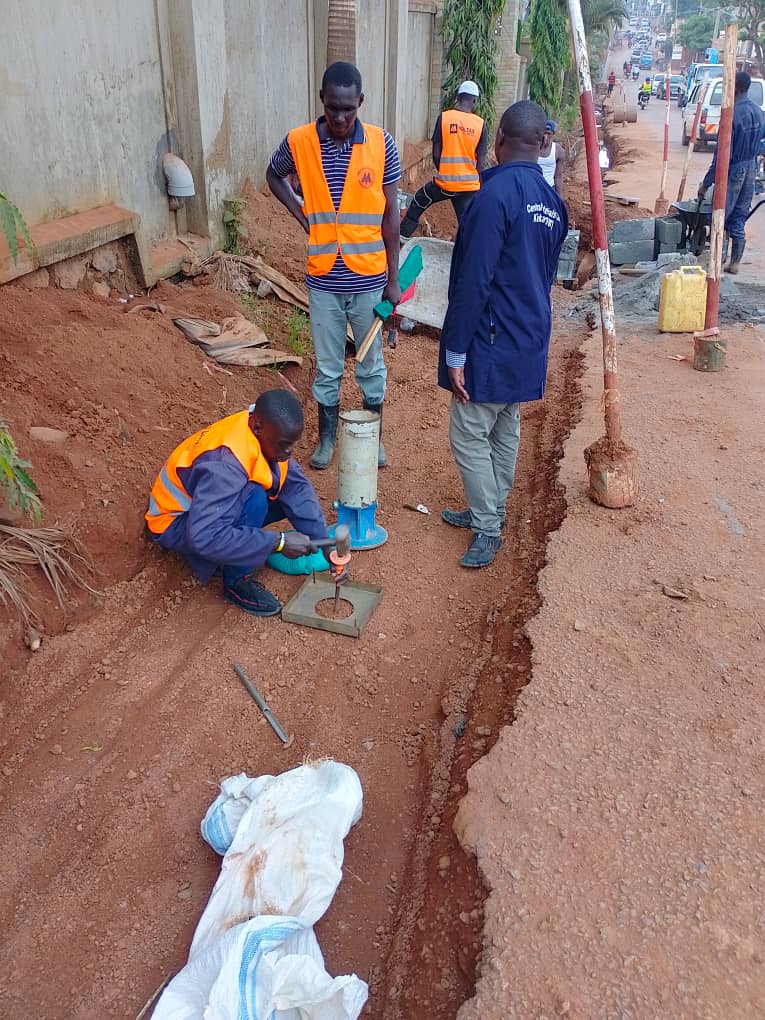
The worksite is also somebody's daily route
Urban road construction takes place among homes, shops, schools, clinics, public transport, pedestrians and utilities. A technically sound design can still cause preventable harm if access and information are treated as afterthoughts. Before mobilisation, the team should map affected frontages, high-footfall times, emergency routes, loading needs, drainage paths and known services. Engagement must include people who walk or use mobility aids, not only vehicle owners.
A traffic-management plan should be prepared by competent personnel and approved through the contract and relevant authorities. It defines work zones, diversions, signs, barriers, speed control, flagging, pedestrian paths, public-transport interfaces and night visibility. Conditions change as the works advance, so the plan needs inspections and revisions. A sign left after a diversion changes is misinformation, not safety.
Find and manage utilities systematically
Available records for water, power, telecommunications, sewerage and drainage should be collected early, but drawings alone are not proof of exact location. Coordinate with utility owners, inspect surface evidence and use appropriate detection and careful trial excavation. Mark confirmed services and brief operators before work begins near them.
If relocation is required, define who designs, approves, pays, schedules and witnesses it. Temporary support or protection also needs an approved method. An accidental strike can endanger workers and the public, interrupt essential services and stop the whole programme. Emergency contacts and a response procedure should be visible to site leaders. Never conceal a damaged service; isolate the area, notify the responsible parties and document the incident.
Communicate changes people can act on
Useful notices state what will change, where, when, for how long, what alternative is available and whom to contact. Use channels suited to the corridor: advance signs, direct notices to frontages, local leadership, transport associations, site boards and verified digital updates. Avoid promising a reopening date that the construction team has not confirmed.
- Give additional notice for complete closures, noisy work or interrupted access.
- Maintain a safe route to essential services and agree delivery arrangements with businesses.
- Log each complaint, location, owner, action and closure date.
- Escalate safety, damage and access issues immediately rather than waiting for a weekly meeting.
- Explain unavoidable disruption respectfully without dismissing the affected person's loss.
Use records to improve the next stage
Daily coordination should review the coming workfront, traffic setup, utility permits, stakeholder commitments and unresolved complaints. Photographs can record pre-existing property condition, installed controls and reinstatement, provided privacy is respected. Incident and near-miss reviews should produce an action, owner and deadline rather than blame alone.
At each stage change, walk the route from the perspective of a child, a person carrying goods, a wheelchair user, a boda rider and an emergency responder. Check whether barriers are continuous, ramps are usable, drains are covered safely and directions remain visible after dark. Good urban-road administration does not remove every inconvenience, but it makes disruption planned, proportionate, communicated and traceable.
Closeout also needs community discipline. Confirm that temporary signs and barriers are removed, accesses and utility chambers are reinstated, drainage is clear and promised follow-up work has an owner. Publish the appropriate contact for defects without creating an expectation that every pre-existing condition will be repaired. A final joint walk can settle small issues before they become lasting grievances.
Archive the stakeholder register with appropriate privacy controls and summarise recurring issues for the next urban project.
← Back to all construction insights